Is Our Future in Television?

The Rising Costs of Film Production – Shifting Value Towards Television Series
Producing a film for us is an expensive endeavor. The costs include thousands upon thousands for feature films, especially those that boast a stellar cast of protagonists, outstanding supporting actors, numerous extras, and impressive locations. Elaborate sets, props, costumes, sophisticated equipment, large crews and intricate storytelling all contribute to massive budgets. The question arises: is this investment worthwhile in the age of AI?

There is a growing sentiment in our midst that the high costs of elaborate film production may no longer be justified. Instead, investing hard to come by resources in a television series can yield significantly greater returns.
A TV series sold to one of the many competing streaming platforms or international TV networks that are constantly seeking new content, can generate a return that is potentially 1000 times greater than what is possible with a single, high-budget film. Even films with impressive production values, such as Maleficarum, Justine, Olalla, Seditiosa, or Dead But Dreaming, may not match the earning power of a well-placed TV series.

The central concern facing our production company is whether our current efforts are meeting our goals. A crucial question arises: do our films generate enough sales to justify the expenses involved in making them?
For a time, the answer was positive. Older titles like Maleficarum continue to sell well and maintain strong ratings. Similarly, Justine has performed consistently. Recent releases, such as Seditiosa, have proven successful and currently hold the top position in our catalog. Nevertheless, despite these modest successes, overall sales remain low. Our newest film, Pygmalion, has not met expectations in terms of performance, even though it is regarded as a quality production.
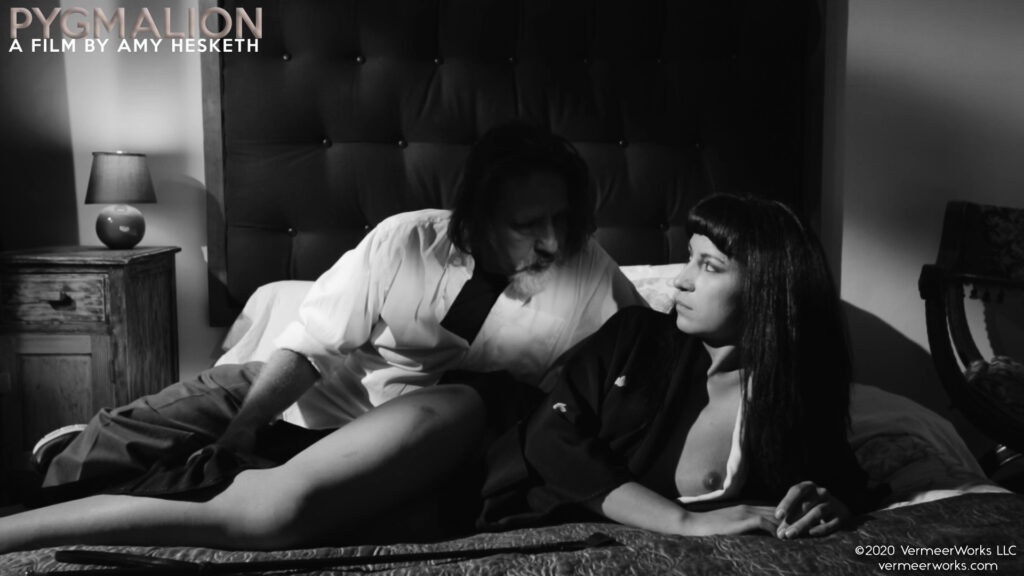
https://movies.redfeline.com/us/pygmalion/p/207011
In light of these challenges and the fluctuating performance of our film releases, we are increasingly considering a shift in focus. The prospect of developing a television series is emerging as a priority for our company, representing a potential new direction to address current market realities.
We are evaluating the distinct approaches we had to secure the necessary funding for our upcoming projects. A first option involved raising $40,000 directly from individual fans for the production of Crucified Four. This strategy required engaging our audience through targeted campaigns and appeals, leveraging their support for our creative endeavors. This approach did not work as previous campaigns did.

As an alternative to fundraising we engaged in promoting our films to increase our sales and, at the same time, we started a streaming channel, creating a new source of earnings.
The first part of that insane plan did not succeed, the sales remain low, and going lower. The second part of the plan, the streaming channel, is moving at a slow pace, very far from our goal. It might get there, eventually, maybe in many months or years.
Given the circumstances an old plan came back to the surface. We are looking into proposing a new documentary to major broadcasters such as NatGeo, similar to the films we have previously produced for them. This route would involve preparing a comprehensive proposal and seeking a larger budget, approximately $200,000, to support the production of a documentary which would be part of the TV series we have in mind. Those funds would cover the expenses of the documentary proposed and part of the first season of the series.
This path presents its own set of challenges and opportunities, and careful consideration is needed to determine if that option is feasible for our company at this time. It seems realistic to expect that we could achieve our fundraising target within a reasonable timeframe. The option we are considering— securing a larger budget through a documentary proposal to major broadcasters—offers a viable path to successfully meeting our financial objectives.

Another option is to stay the course and keep producing no-budget films, like Fiend Fatale, with the hope that they will eventually generate enough revenue to fund larger productions. We could also experiment with AI-driven projects—though that is not our preferred direction.
JDArts I don’t like movies made with AI. To me, they only demonstrate the decline of production, cost-cutting, and the laziness of production companies. I will always support movies 100% made by people. They have essence and soul.
In many of the AI shorts we see, the creators are newcomers experimenting with the tools. By contrast, professionals tend to use AI with a specific production goal in mind—for example: Targeted visual effects (as Jac is doing now). Green-screen compositing and other VFX workflows we have discussed in earlier posts.
Green-screen techniques have been part of cinema since its early days—just in different forms. Most big science-fiction and superhero films are shot largely in front of green screens, and many of the characters and environments we see are sophisticated animations (and increasingly, AI-assisted creations).
As we discussed in earlier posts, AI can be genuinely useful in production when it is applied to specific tasks or effects. But it is not a replacement for making an entire film.
You can read about the history of Green Screen effects here:
For our kind of productions, AI could be most valuable when it reduces costs on specific, practical elements—without replacing the filmmaking itself. Specifically, creating compelling backgrounds or adding believable “extras” to a scene that would otherwise cost thousands of dollars to stage and shoot
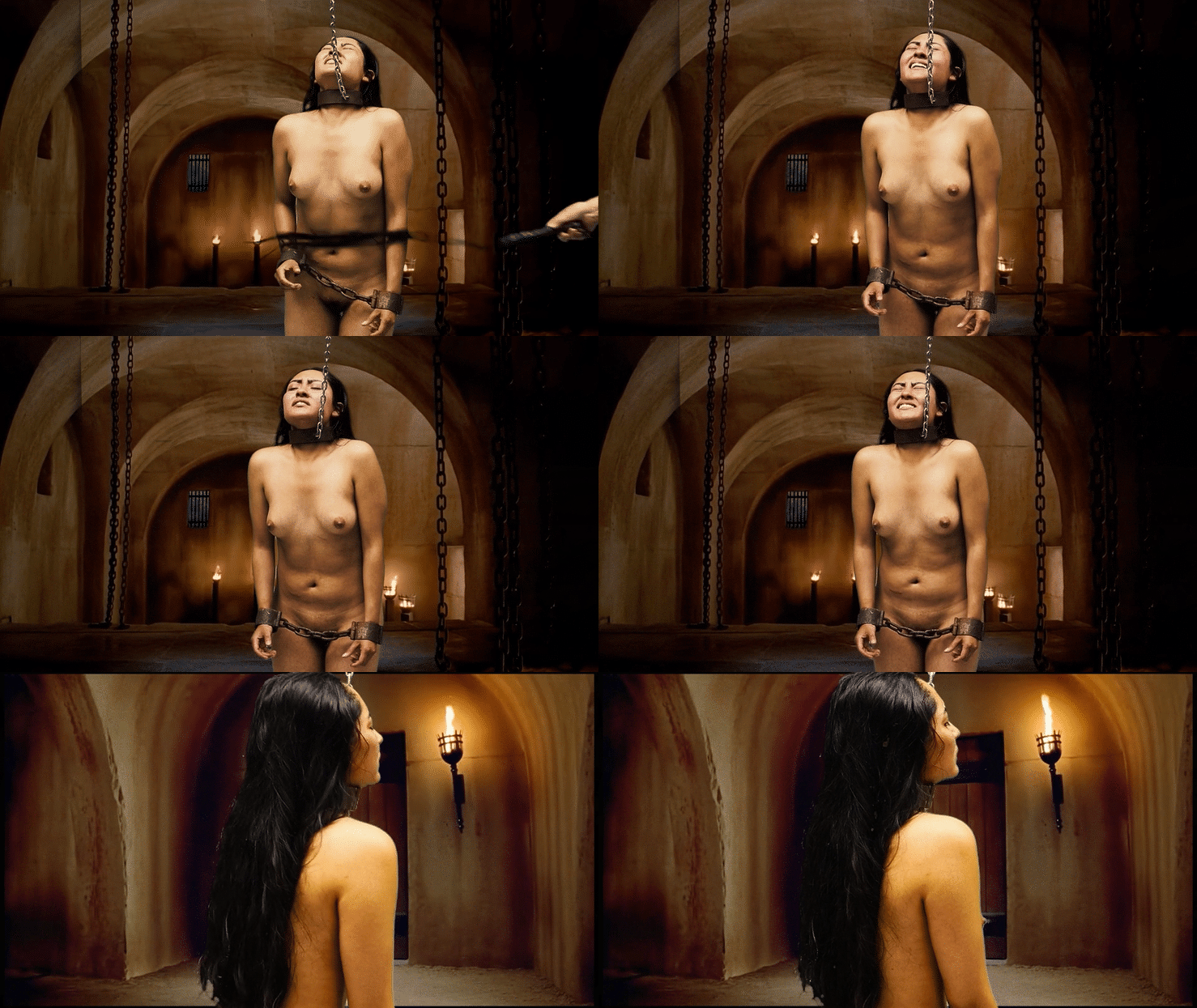
As a test, Jac filmed a whipping scene with Ligia in front of a green screen. Afterward, he composited the footage over a dungeon background he generated with AI—similar to the approach used in many sci-fi productions.
Because the shot had constraints, the setup required careful planning: No camera movement, Ligia performed multiple positions to capture different views (side, back, torso).
Jac generated several matching dungeon angles to align with her positions and the intended framing
Here a gif taken from the scene to illustrate the point made.
doe.1971 For sure. AI doesn’t require salary, actors’ guild compliance, complicated copyright negotiations, non-nudity clauses, sick days, schedule overlaps, menstrual issues, drinking issues and none of the drama queen flairs of the real world actors.
Luckily for flesh and blood actors we are not there yet in terms of AI capabilities but in the future I’m sure actors will look for career change.
Probably you’ll still have a small coterie of productions using real actors and a small but dedicated following, much in the way a few people today can swear that BBC Masterpieces are the only thing worth watching on TV but that will be a fringe.
We are a small independent production company and we can say that our audience is, indeed, a fringe. We generally do not run into the kinds of complicated issues that large productions sometimes face. Our actors are paid fairly, and the working relationship is solid. We also make sure expectations are clear—especially regarding the types of scenes we will be filming.
Occasionally, someone may need to take time off—for example, a week due to menstrual symptoms—but that is rare (perhaps once a year). In some cases, the actresses might work even when they are having their period.
You can buy Martyr here
https://movies.redfeline.com/us/all-products/c/1/martyr-english-subtitles/p/7705
You can also stream it
https://stream.redfeline.com
Looking Ahead
After more than 30 years of producing films, we still feel confident about continuing. However, the conditions are changing—and not for the better—so we need to evaluate our options as we plan for what comes next and as we run into the new cycle in front of us. In our experience, we move in cycles and a new cycle lasts about 10 years.
Where we go from here, time will tell. In the meantime, we invite you to keep enjoying our catalogue—films made with real, flesh-and-blood performers delivering unforgettable roles.
https://movies.redfeline.com
https://stream.redfeline.com