50 Shades Of Green

We are planning to incorporate green screen technology into our production process for a variety of reasons. The potential impact of Jac’s initiative is significant. If Jac’s planned approach to implementing green screen technology proves successful, it could influence our workflow and production methods. The changes he is experimenting with—such as painting an entire wall, and eventually the whole studio, with chroma green—are aimed at maximizing flexibility in background selection and enhancing the overall visual quality of our projects. This initiative has the potential to redefine how we utilize our resources, streamline the integration of diverse backgrounds, and ultimately change the way we make films.
JDArts The good news is knowing that the use of AI will decrease. Honestly, I wouldn’t have liked to see a movie made with AI. I much prefer real, natural art, art that comes 100% from human beings, where everything is performed by real people in a natural environment, without green screens or AI-generated characters.
It is important to clarify that AI and green screen technology are distinct tools within the realm of film production. While both serve valuable yet different purposes, they should not be confused as interchangeable methods. In the context of our current projects, there is no intention to fully use AI for the creation of a film.
We remain dedicated to using real actors to portray the characters in our movies. Throughout the production process, these actors will perform their scenes on actual sets, whether those environments are indoors or outdoors.
While our commitment to using real actors is unwavering, we are also exploring the use of green screen technology as a tool for set creation in certain films. This approach allows us to design and realize specific environments that may not be feasible to construct physically. For example, in the film Crucified Four, we anticipate the need for elaborate sets such as an Egyptian temple. By employing green screen techniques, we can create these visually complex backgrounds while maintaining the integrity of live performances by our actors.
Below test of Geraldine, who will play Pauline in Crucified Four, in an Egyptian temple.
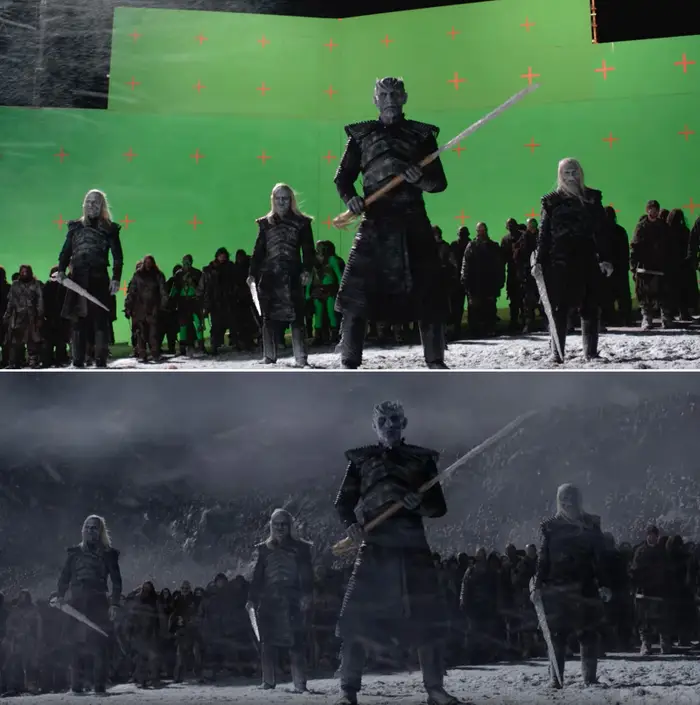
Green screens play a crucial role in the world of cinema, serving as a foundational technology for creating immersive visual effects. Their use is widespread, appearing in a variety of genres and productions. For example, many Roman epic films rely extensively on green screens to recreate ancient environments and grand battle scenes that would otherwise be impossible to film. Likewise, television series such as “Game of Thrones” are renowned for their heavy use of green screens, which allow for the seamless integration of fantastical elements and expansive landscapes into live-action footage.
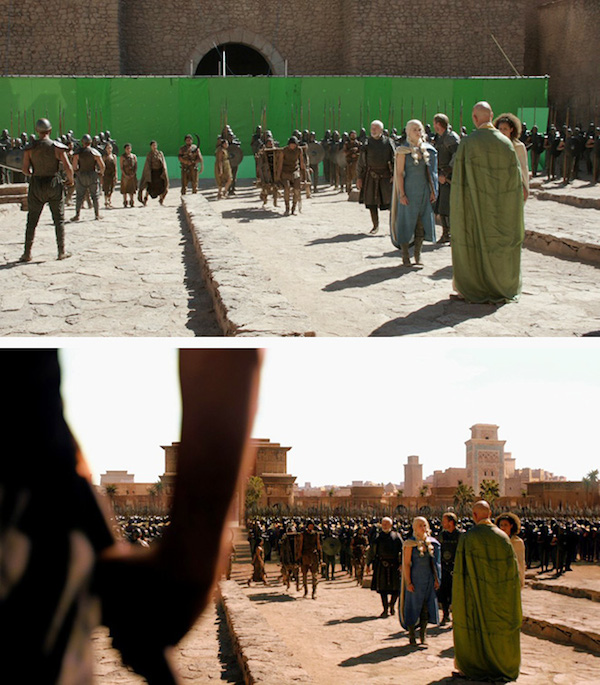
Far from being a rare or niche technique, green screens have become a standard component of most film productions. In fact, many contemporary movies could not be realized without this technology, as it enables filmmakers to transcend the limitations of physical sets and locations.
Despite their widespread adoption, working with green screens is far from simple. The process demands significant effort and expertise, typically involving large teams of skilled professionals. This level of complexity contributes to the substantial resources and expenses associated with producing high-quality visual effects. In summary, while green screens are indispensable to modern filmmaking, their effective use requires careful planning, coordination, and, in most cases, heavy investment.
The evolution of green screen techniques did not begin with AI. Previously, filmmakers relied on sophisticated video technologies to produce scenes that required the illusion of expansive backgrounds and large groups of people. An example of this was showcased at a film conference in New York, back in the year 2000.
Jac attended the film conference in New York with the aim of sourcing the right equipment for the production of Martyr. His search extended beyond just cameras, including computers and specialized software necessary for the filmmaking process. During this conference, Jac witnessed a demonstration by a company showcasing the use of green screen technology in major film productions. The presentation specifically highlighted how scenes from “The Lord of The Rings” were created using green screen setups and the associated software tools. This experience provided valuable insight into advanced set creation methods, which would later influence considerations for integrating green screen technology into our own filmmaking practices.
These methods, although predating AI, laid the groundwork for current advancements and highlighted the importance of innovation in cinematic visual effects.
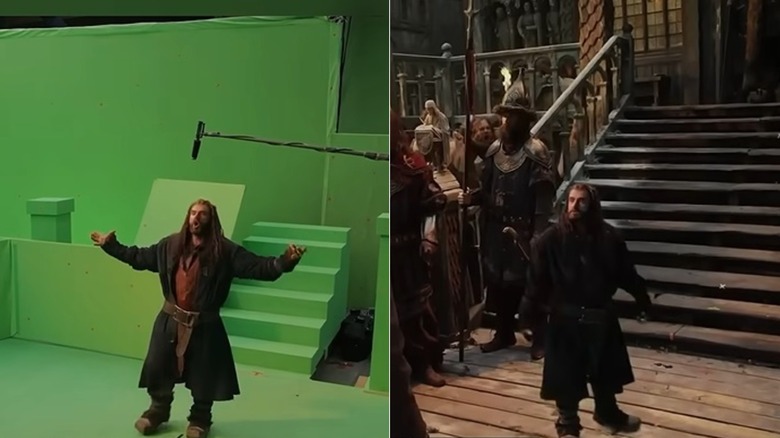
Among filmmakers, the use of green screen technology is universally accepted and rarely questioned if at all. It has become a fundamental aspect of the filmmaking process, relied upon consistently across a wide range of productions. From its early adoption to its current, pervasive role in the industry, green screens have shaped the way visual effects are created, making their use an unquestioned standard rather than a subject of debate.
For Jac, the primary challenge lies in determining the most effective way to utilize green screen technology given the resources available. Driven by this question, Jac recently began hands-on experimentation to explore the possibilities. As a practical step, he painted an entire wall in his studio with the specific shade of green commonly used for green screen effects, also referred to as “chroma green.” His goal is to eventually repaint the entire studio green—transitioning from its current black—to provide greater flexibility in choosing backgrounds for his projects. This approach mirrors techniques seen in major productions, such as those used in “Game of Thrones,” where set design enables seamless integration of diverse backgrounds through green screen technology.
wanttoknowmore Best is to use AI to supplement scenes – Provide background or crowds scene from the person on the cross. That can greatly enhance the film and lower production costs. I agree at this point in development, a full AL movie does not have the quality of one with real people as the main characters.
AI technology has made significant strides in recent years, but the AI video generators that Jac is currently testing still face notable limitations. At present, these tools are not sophisticated enough to produce an entire film on their own. Although AI video generators can contribute to the filmmaking process by creating certain types of video content, their capabilities fall short of the complex requirements involved in assembling a full film sequence typical of traditional film production.
Despite these constraints, AI video generators can still be valuable when used thoughtfully and with patience. Rather than constructing complete scenes, these tools are most effective when employed to generate select shots within a scene. This focused application allows filmmakers to incorporate interesting and unique visuals into their projects, even if the technology cannot yet handle every aspect of scene creation.
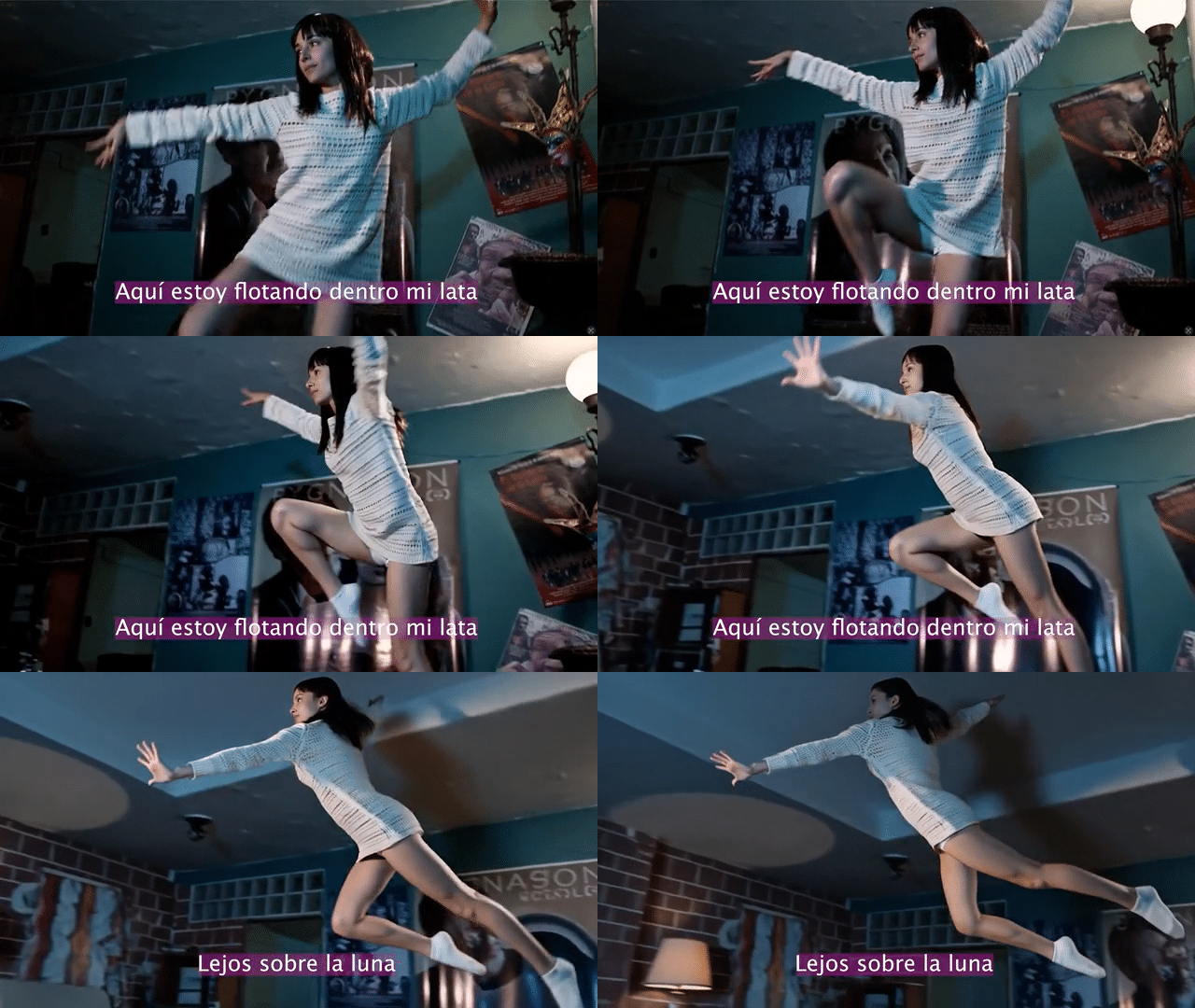
During the post production of 69 Année Érotique, Jac took time to review some scenes and found inspiration to incorporate artificial intelligence into a few of them. Jac described this particular moment as a genuine flight of fancy.
The process of experimenting with AI led to unexpected and intriguing results that added a unique quality to the film, it benefited from an added richness and originality. Pleased with the outcome, Jac decided to retain these AI-enhanced scenes in the final version, allowing their distinctive and appealing characteristics to become part of the movie’s overall aesthetic. with the AI-driven moments now forming an integral part of its overall visual and narrative style.
The image below shows a small part an initial attempt at crafting the intended material. It is important to note that this version serves as an early draft.
The completed and polished version of this scene, including the music will be featured in the film.
Cruxlover24 Danielle is going to do camera work now? I hope she doesn’t stop acting in Jac’s new projects.
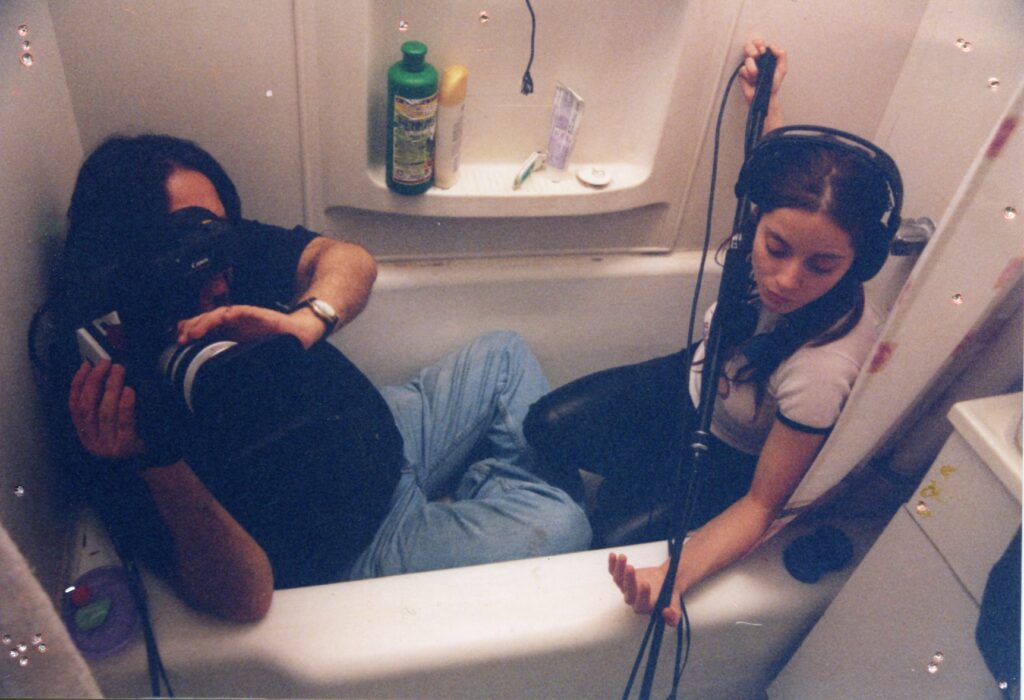
Throughout their work with Jac, Dani and Mila have both contributed significantly behind the camera and in technical roles. Under Jac’s direction, Dani operated the camera during scenes in CruXtreme IV, capturing moments where Mila was made to suffer. Dani also handled camera duties for Deep Cover Mole, again documenting scenes of Mila’s torture.
Likewise, Mila took on camera responsibilities in films where Dani was the character experiencing suffering. This mutual exchange of roles highlights their collaborative approach to filmmaking. In addition to camera work, both Dani and Mila were involved at different times with the camera and sound for 69, further contributing to the technical and creative aspects of the production.
It is common practice in our productions for cast members to take on multiple responsibilities behind the scenes. Many performers contribute to various tasks, supporting the filmmaking process in diverse ways. For example, Carmen assisted with several duties during the filming of Martyr, stepping in to help with certain scenes. This spirit of collaboration ensures that each project benefits from the collective talents and flexibility of the team, enriching both the technical and creative aspects of production.
We will have more updates coming up soon. In the meantime you can watch our films!
Get them at https://movies.redfeline.com
Stream them at https://stream.redfeline.com
Get a DVD by mail at https://dvds.redfeline.com